
The one-day symposium was convened on Friday, 26 June 2026, at Bilik Anggerik, Level 3, Block D, Institute for Advanced Studies (IAS), Universiti Malaya. The event was officiated by Prof. Dr. Khadijah Mohd Khambali @ Hambali, Director of the Centre for Civilisational Dialogue, Universiti Malaya.
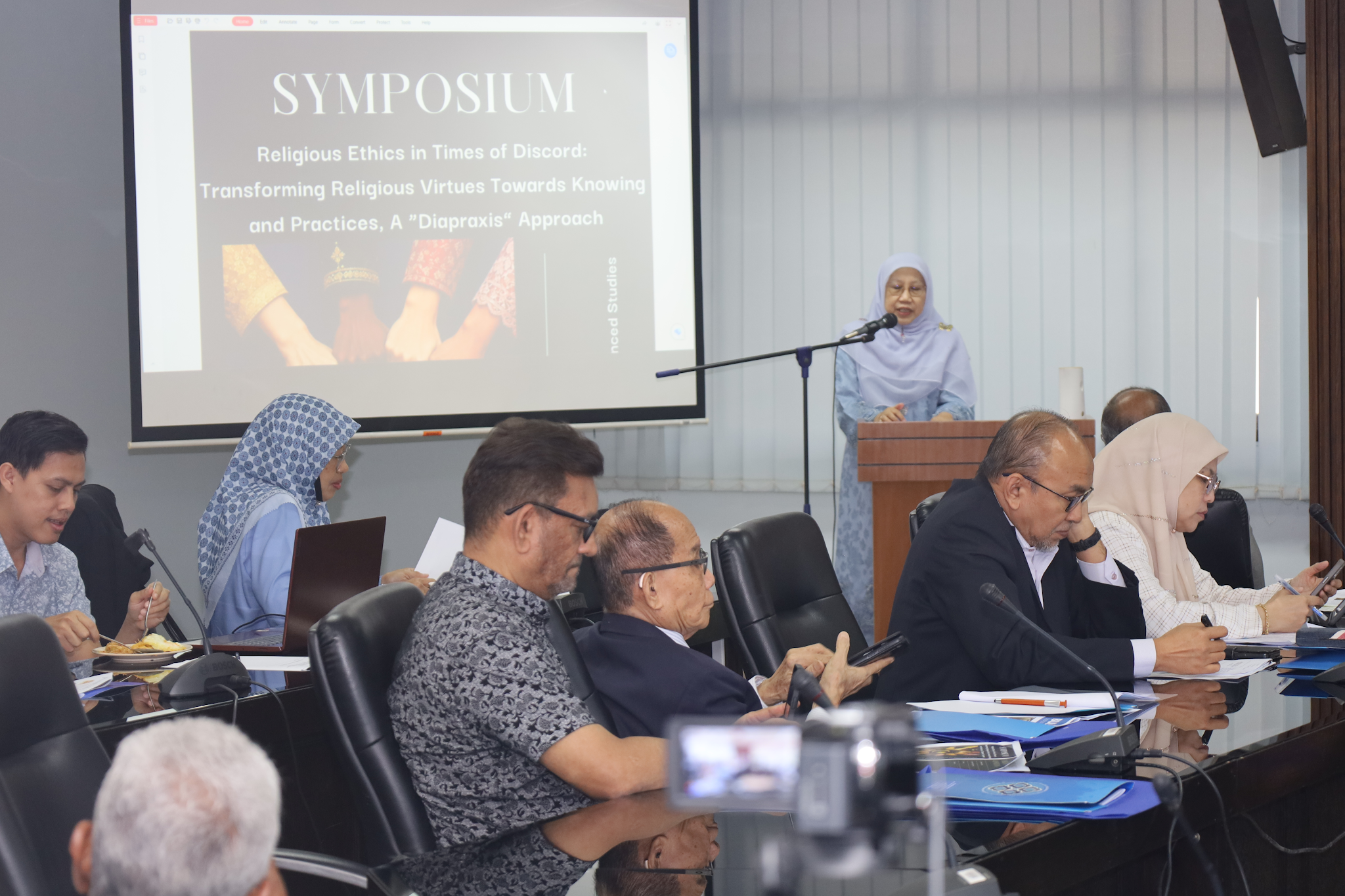
Prof. Dr. Khadijah Mohd Khambali @ Hambali
This inaugural symposium was jointly organised by the Centre for Religion and Society (CRS), Seminari Theoloji Malaysia (STM) and the Centre for Civilisational Dialogue (UMCCD), Universiti Malaya. It centered on the role of religious ethics in addressing the challenges of plural societies and contemporary social change, with the following aims:
- To strengthen ethical dialogue between Islam and Christianity.
- To develop a framework for harmonious living.
- To apply ethical values in social practice.
- To jointly confront social and technological challenges.
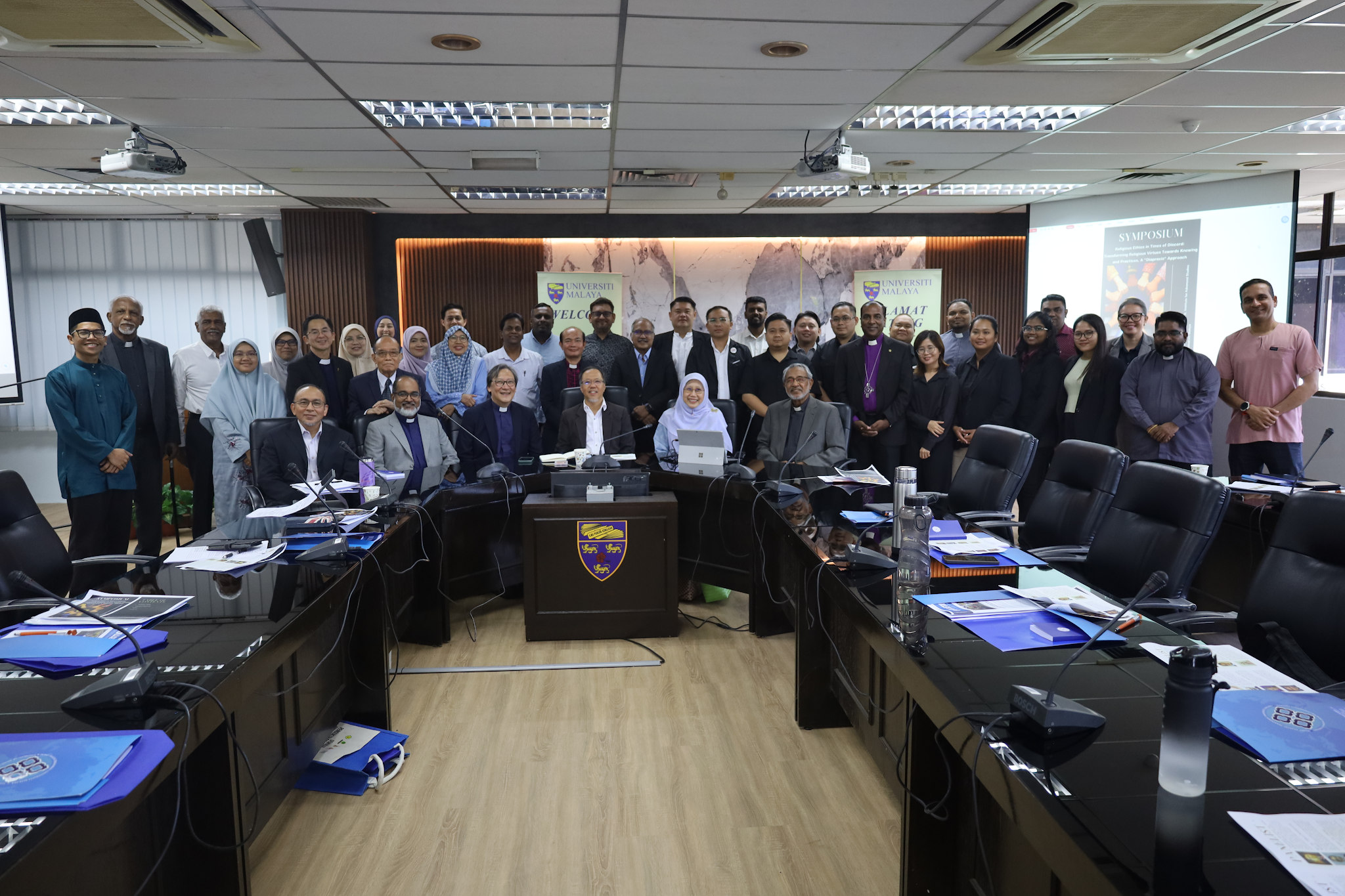
All participants
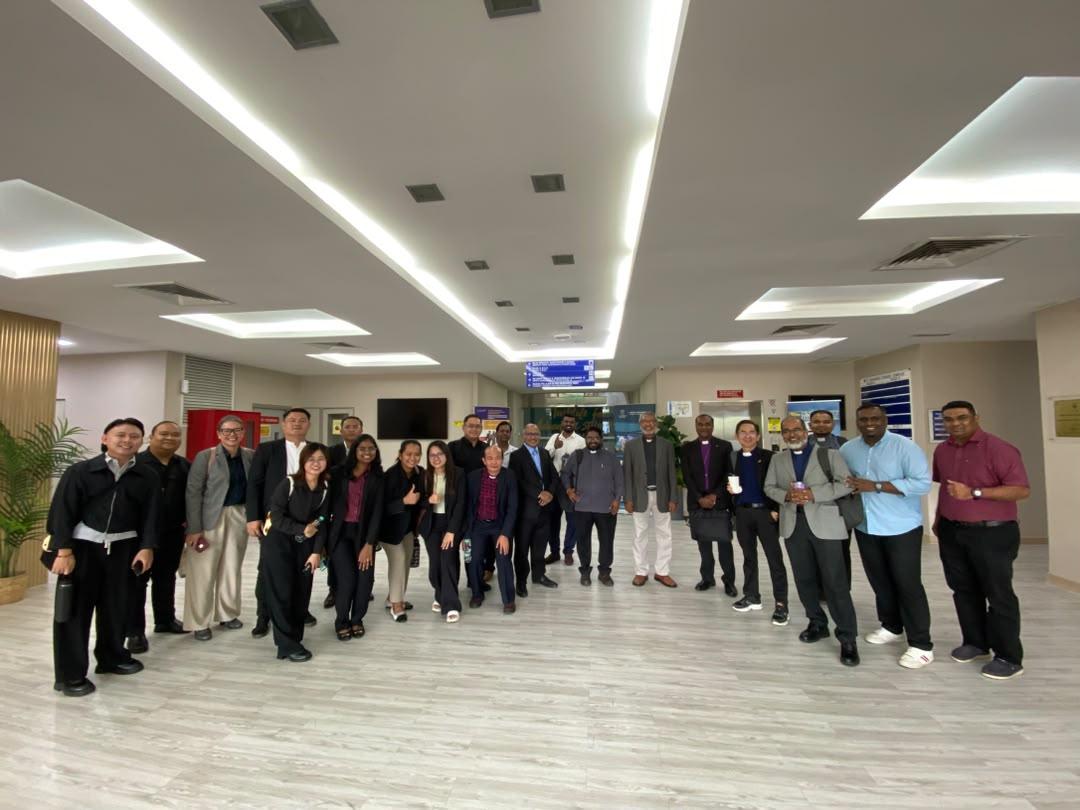
Students, faculty and STM Council members
STM was represented by 28 participants. The delegation comprised of the Secretary of the Council of Churches of Malaysia, Rev. Dr. Philip Lok, members of the STM Council, faculty members and students. Their participation underscored STM’s commitment, through CRS, to advancing interreligious dialogue, academic discourse and social ethics.
Symposium Sessions
Two sessions were successfully conducted:
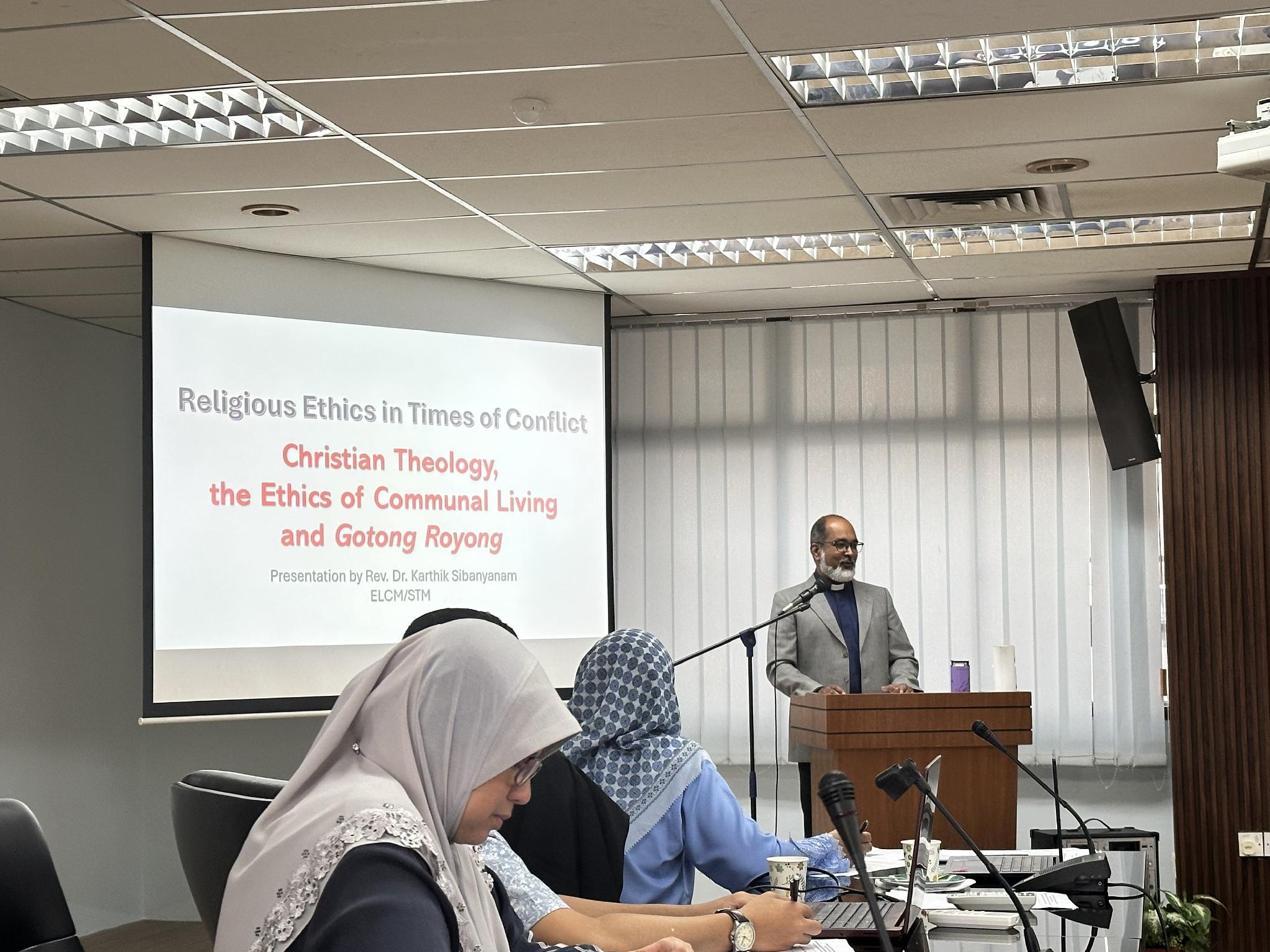
(Session I (Morning): Religious Ethics, with Rev. Dr. Karthik Sibanyanam
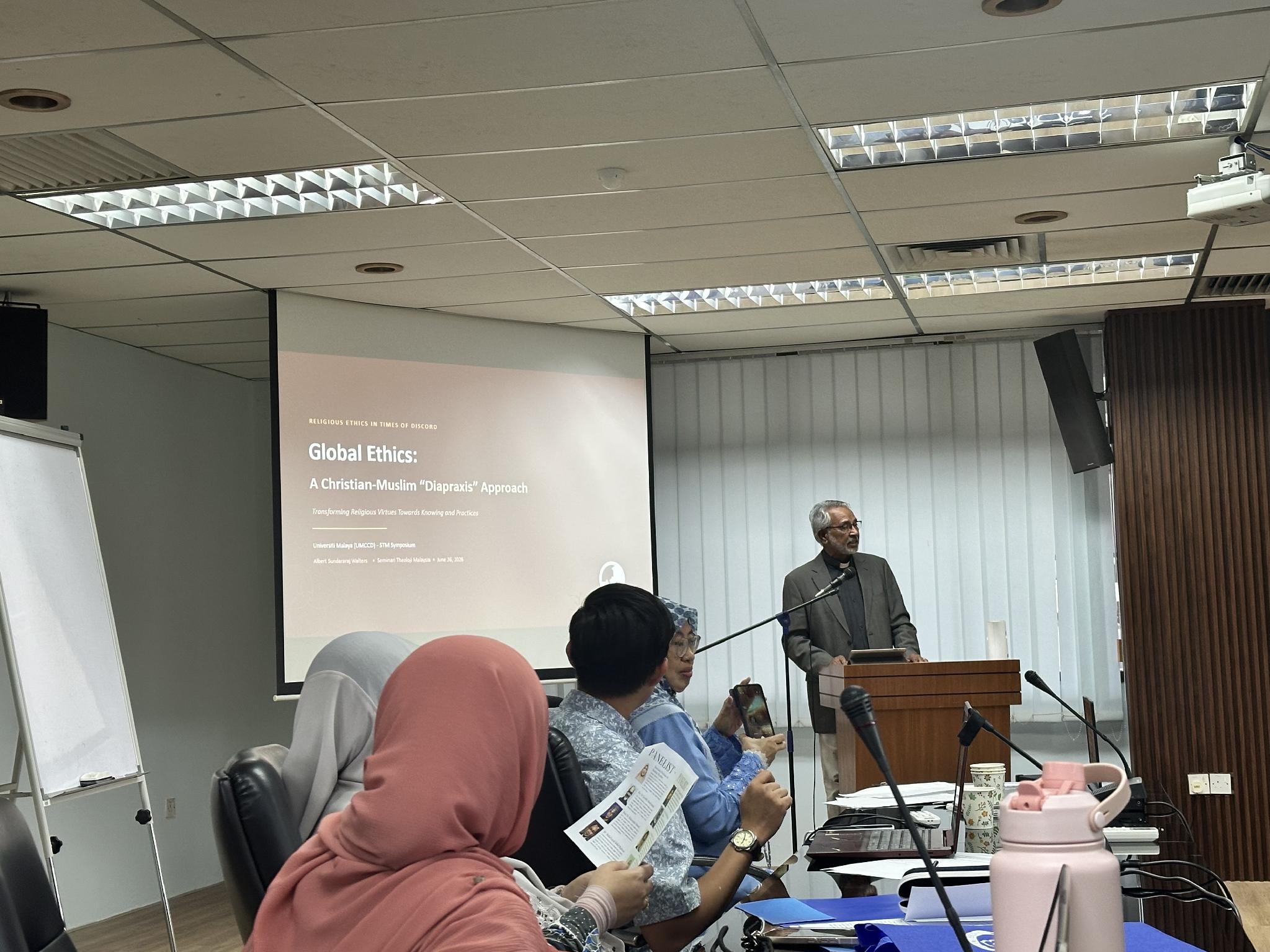
(Session II (Afternoon): Global Ethics, with Rev. Dr. Albert Sundararaj Walters
Other distinguished panellists included:
- Assoc. Prof. Dr. Haslina Ibrahim (IIUM)
- Prof. Dr. Baharudin Ahmad (IIUM)
- Dr. Mohd Farid Mohd Shahran (IKIM)
- Assoc. Prof. Dr. Mohd Khairul Naim Che Nordin (UM)
- Dr. Peter T.C. Chang (ISEAS)
- Ms. Nur Ain Shahirin Abdul Aziz (IKIM)
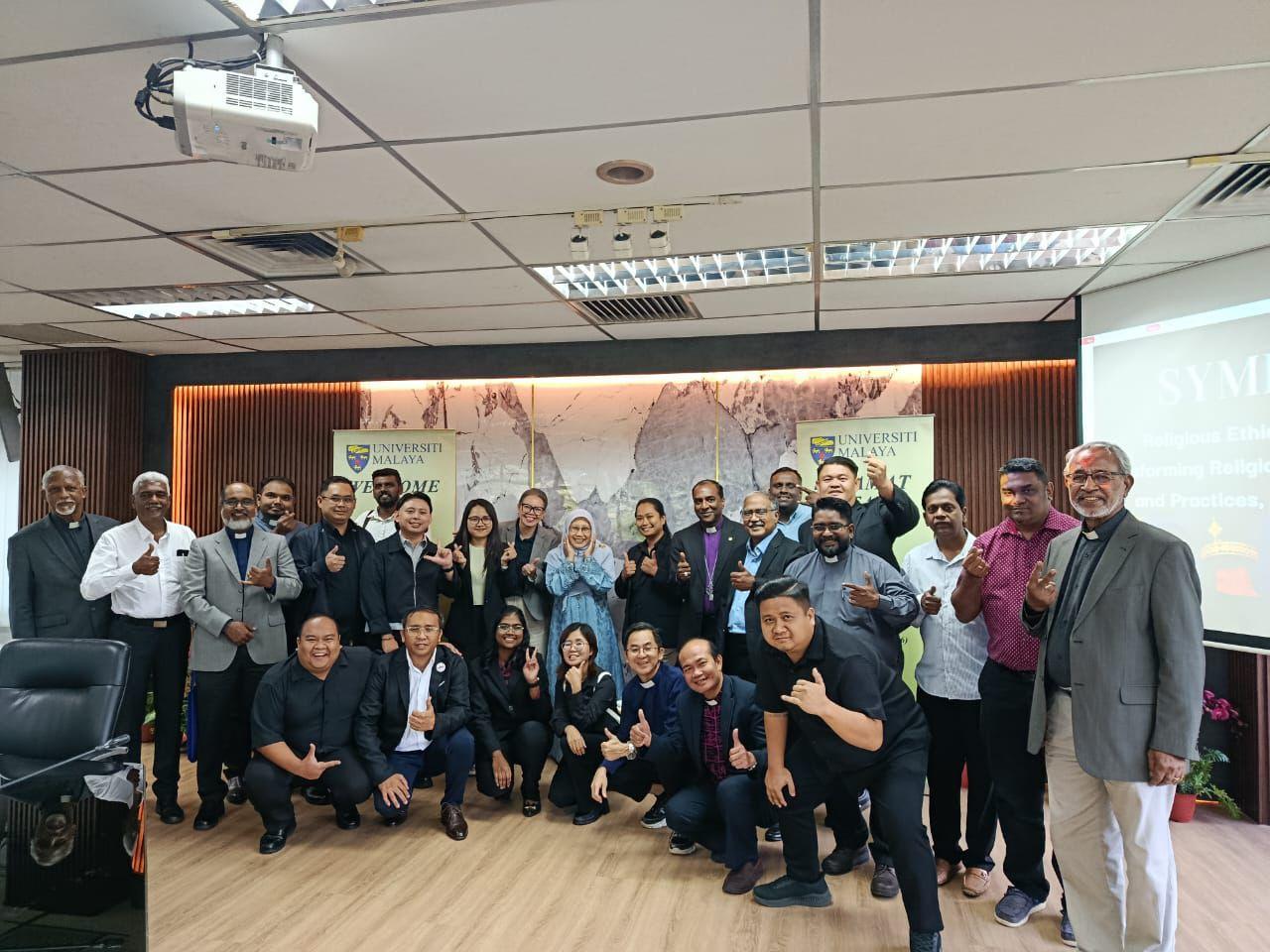
STM team with Prof. Dr. Khadijah Mohd Khambali @ Hambali
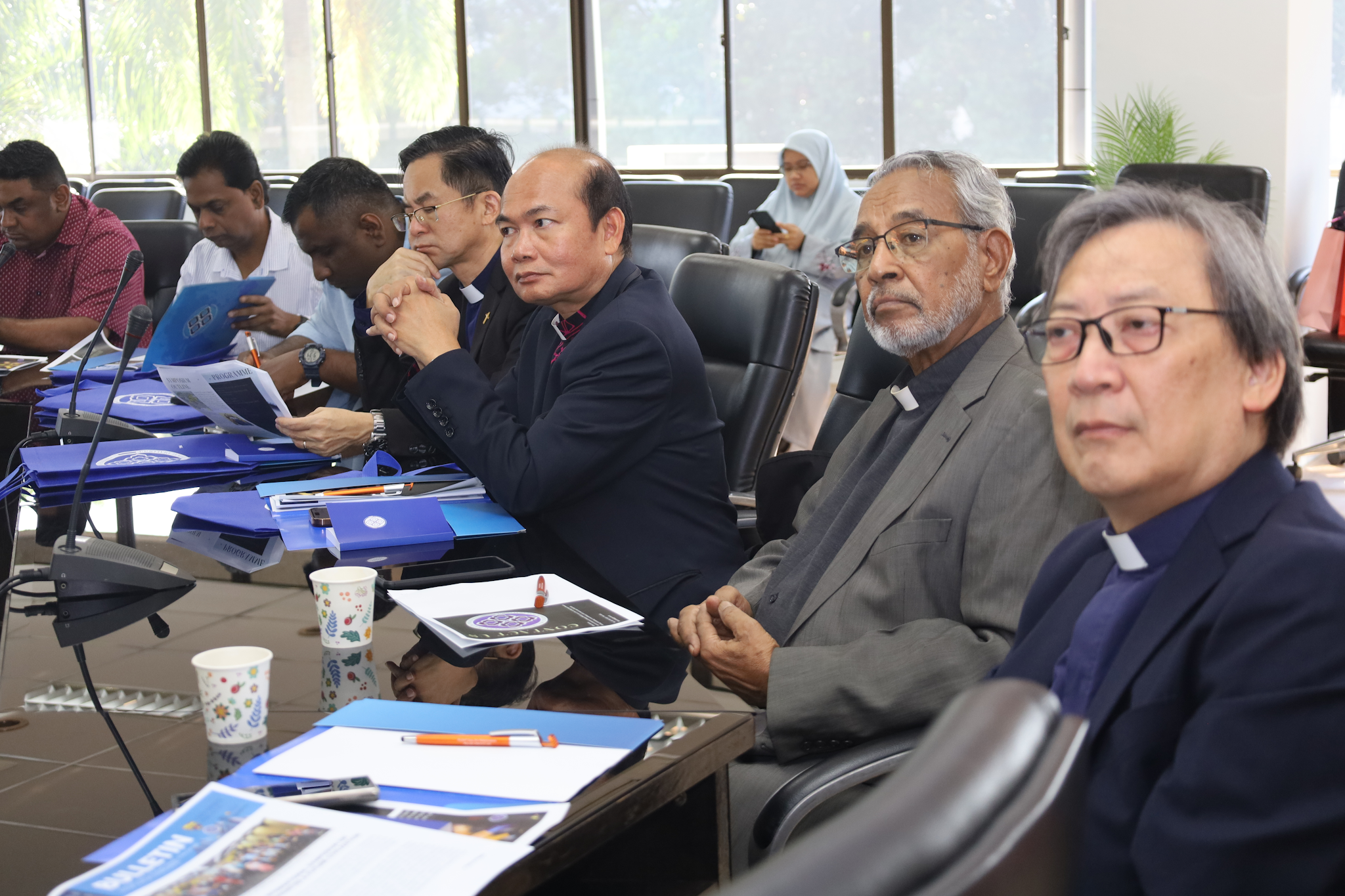
Foreground- Rev. Dr. Philip Lok, Secretary of the Council of Churches of Malaysia
Key Takeaways for Participants
- Renewed awareness of the role of religious sources: A renewed awareness that religious sources can serve as practical guidance in addressing life’s challenges.
- Experience of interreligious exchange: The symposium provided opportunities for meaningful interreligious exchange, opening pathways towards a deeper mutual understanding of ethics and values.
- Exposure to best practices: Participants were exposed to best practices grounded in religious values that may serve as models for social life.
- The beginning of genuine communication: The symposium marked a significant starting point in building bridges of ethical dialogue between Islam and Christianity. It emphasised the connection between knowledge and action through the Diapraxis approach, moving beyond discourse towards concrete steps for developing a framework for harmonious living, strengthening solidarity, and jointly confronting social and technological challenges.
Next Steps
- To deepen and sustain ethical dialogue between Islam and Christianity through future meetings.
- To develop a shared ethical framework for harmonious living in a plural society.
- To apply ethical values in social practices, such as community solidarity, justice advocacy, and charitable work.
- To address social and technological challenges collaboratively across religions and cultures.
- To implement joint programmes and activities that are visible and impactful within Malaysian society.
Through this approach, Diapraxis does not merely generate discussion but fosters concrete commitments to action, laying the foundation for a just, harmonious, and resilient society.
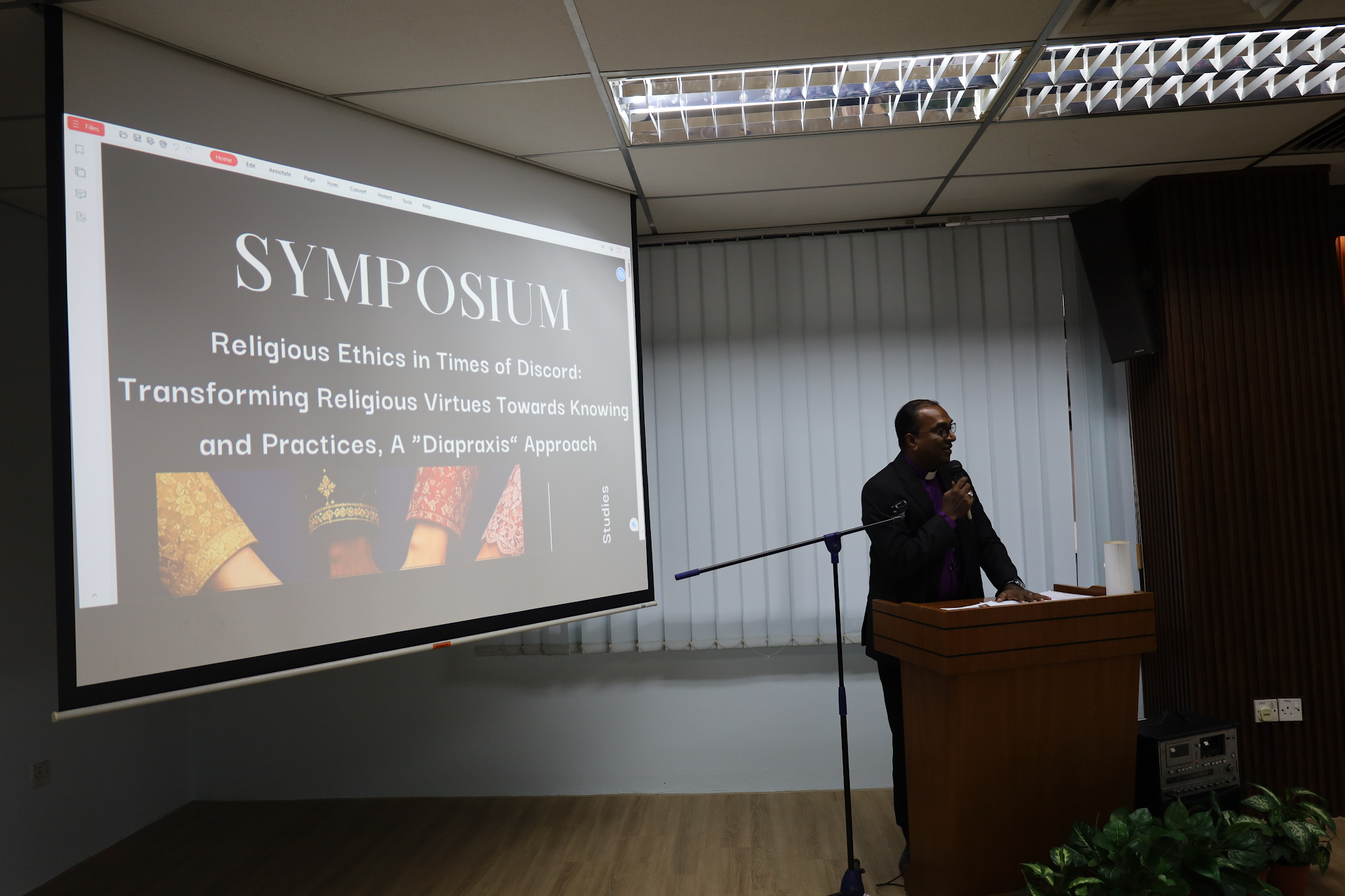
Closing Remarks
The symposium concluded with a closing address by Bishop Steven Lawrence, on behalf of the STM Council. He emphasised the importance of sustained dialogue and the application of ethical values in society. In his remarks, he noted: “Today we have learned that what matters is not going to others, but understanding one another. We also realised that to move forward together, we must build close relationships and trust. Our shared responsibility is to cultivate trust and mutual respect. This session is not the end, but the beginning of a journey – a journey where we encourage one another, strengthen one another, and grow together into better leaders, not only for one community but for all.”
Conclusion
Overall, the programme successfully served as a significant academic platform and interreligious dialogue, reinforcing collaboration between STM and the Centre for Civilisational Dialogue, Universiti Malaya. It also provided a meaningful opportunity for participants to engage with questions of religious ethics, social responsibility, and harmonious living within Malaysia’s plural society. The symposium marks an important step towards continued dialogue, collaboration, and joint action between religious communities in addressing contemporary social challenges.