
The symposium was held on 4-5 August 2026 at the Pacific Sutera Hotel, Kota Kinabalu, Sabah, and was officially opened by Datuk Aaron Ago Dagang, Minister of National Unity. The event was jointly organized by several institutions, including IKIM, Brigham Young University, Seminari Theoloji Malaysia (STM), KITA, and the Office of the Mufti of Sabah.
The roundtable discussions on 4 August explored various themes, including religious perspectives on human dignity, societal well-being in the twenty-first century, and practical actions for the future. On the following day, participants visited several places of worship and charitable organizations around Kota Kinabalu, including the Sabah SIB Church Centre, Tzu Chi Charity Foundation, Puh Toh Si Buddhist Temple, and the Kota Kinabalu City Mosque.
Through its Centre for Religion and Society, STM continues to play an active and committed role as a theological and academic platform for strengthening interfaith dialogue, promoting harmony, and upholding the dignity of every human being.
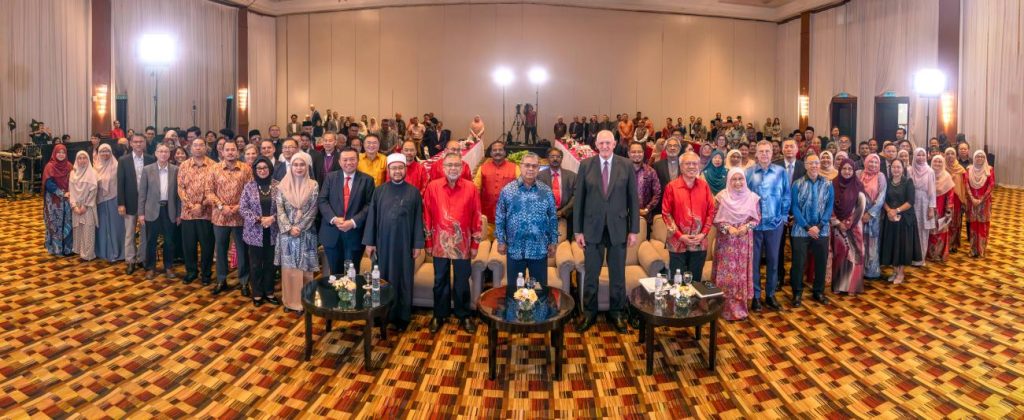
(Group photo of all symposium participants with Datuk Aaron Ago Dagang, Minister of National Unity)
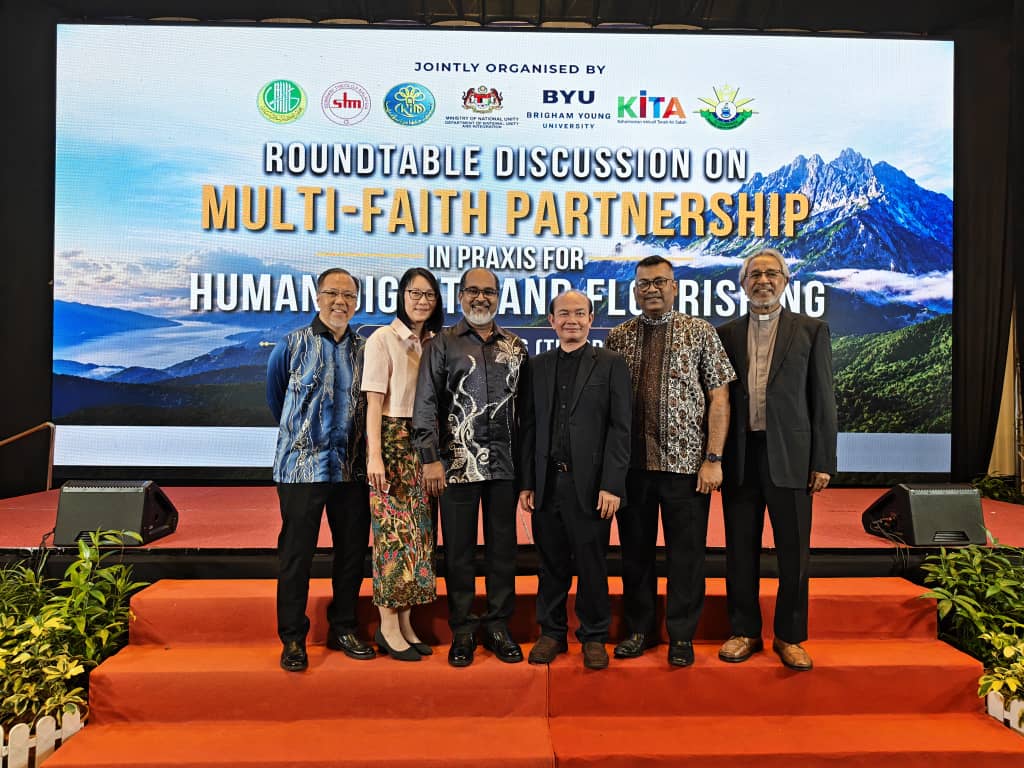
(Representing STM: Mr Eugene Yapp, Dr Tan Ee Yan, Rev. Dr Karthik Sibanyanam, Rev. Jensey Mojuin, Rev. Joseph Yesupatham, and Rev. Dr Albert Sundararaj Walters)
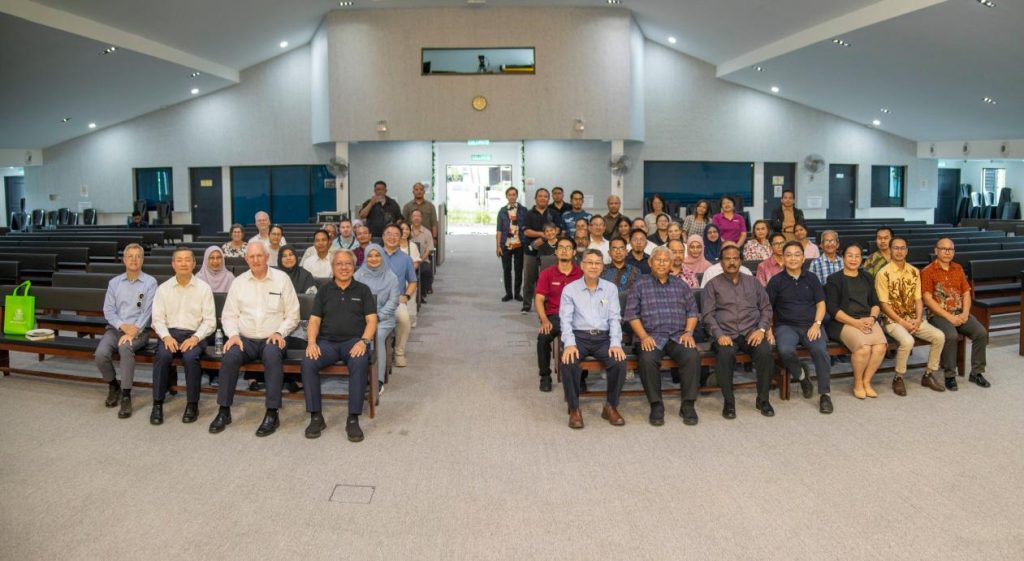
(Group photo with participants at the Central of the SIB Sabah Church, Kota Kinabalu)
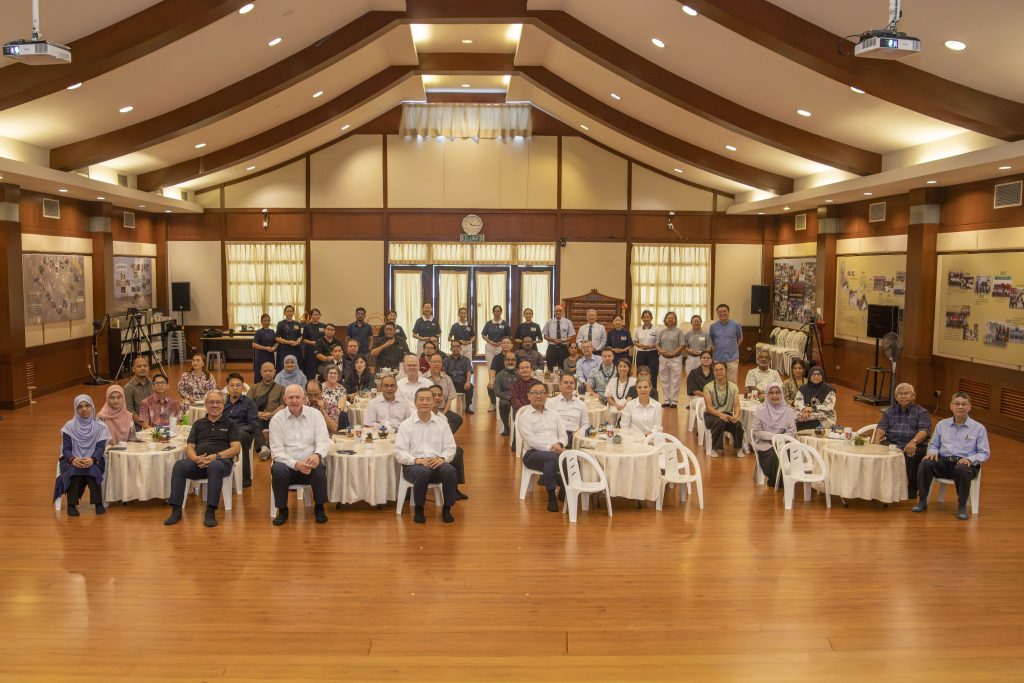
(Group photo with participants at the Tzu Chi Charity Foundation Centre, Kota Kinabalu)
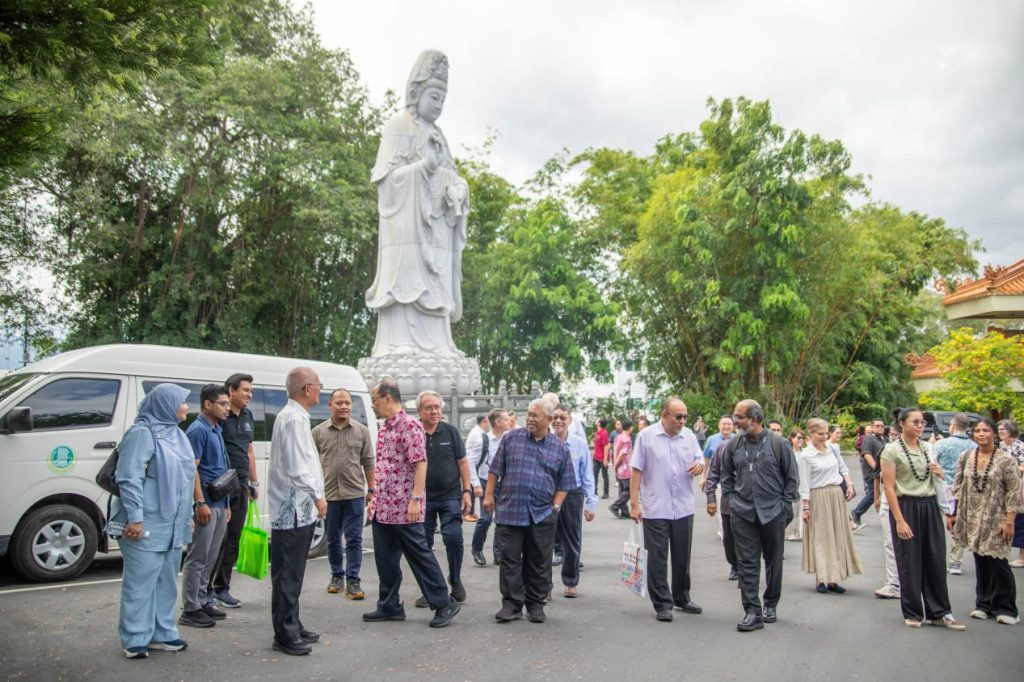
(Group photo with participants at the Puh Toh Si Buddhist Temple, Kota Kinabalu)
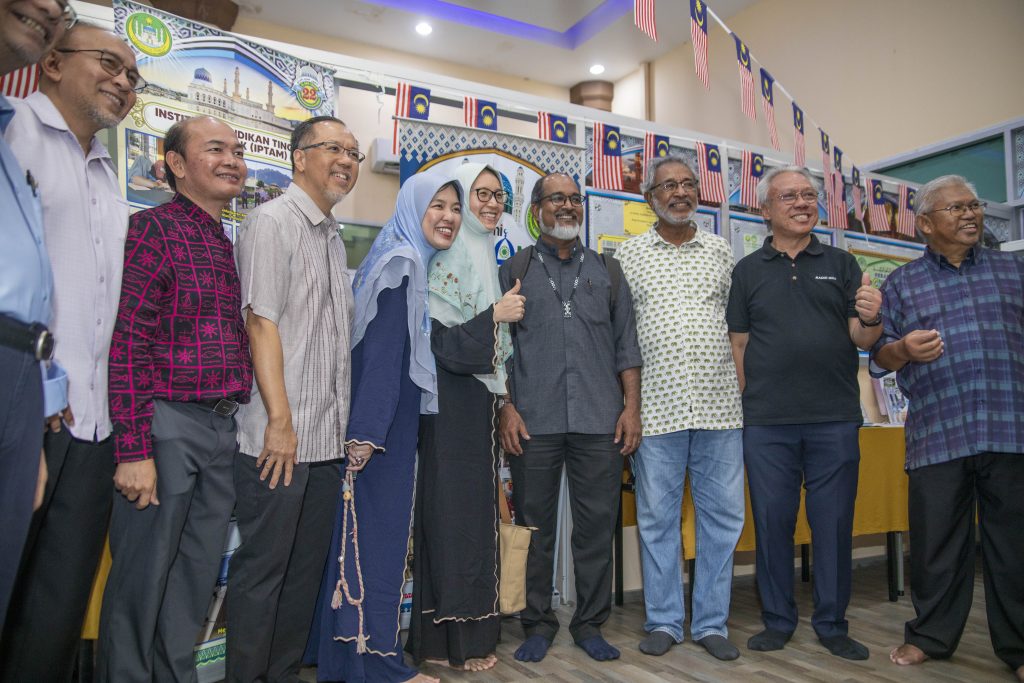
(Photo with Prof. Dato’ Dr. Mohamed Azam Adil, Director General of IKIM (second from the right), at the Kota Kinabalu City Mosque)
The symposium concluded with a unifying statement entitled “Living Human Dignity Together”, presented by Mr Eugene Yapp, who also represented STM.
Key takeaways for participants
A Shared Narrative: Living Human Dignity Together
The symposium emphasized that human dignity must not remain an abstract concept; rather, it must be lived out collectively through everyday experiences, social relationships, and public life.
Five-Point Framework
- Dignity is not merely an idea—it must be lived.
Human dignity should be expressed in daily life, political engagement, and social relationships. If it does not have a tangible impact on people’s lives, it loses its meaning. - Dignity as the foundation of human well-being.
Human dignity must be grounded in compassion, mercy, love, mahabbah, and acceptance. Each religious tradition possesses its own language and resources for articulating and nurturing these values. - Dignity must be articulated positively and concretely.
Public discourse should not focus solely on opposing bias, prejudice, and stereotypes. It must also demonstrate positively what human dignity builds, nurtures, and sustains within society. - Moving from the symbolic to the substantive.
In Malaysia, discussions of human dignity often remain at a symbolic level. There is a need to move toward substantive action that addresses reconciliation, social justice, poverty, religious discrimination, and the challenges faced by refugees. - Practical cooperation as an ecosystem of mutual collaboration.
Efforts should move beyond isolated projects toward a culture of cooperation across religious, ethnic, and social boundaries. The Southeast Asian tradition of gotong-royong (mutual assistance) should serve as a foundational principle for building an enduring ecosystem of collaboration.
Follow-Up Actions
- Develop key performance indicators (KPIs) for interfaith engagement so that collaboration can be measured and evaluated in concrete ways.
- Expand the concept of well-being to include the whole of creation, recognizing the responsibility to care for plants, animals, and the environment as a divine trust.
- Implement tangible projects through NGOs, religious institutions, and local communities, moving beyond textual discussions to practical action.
Key Challenge
The foundation of the narrative is now clear: human dignity is the basis of human well-being. The challenge ahead is to translate this vision into compelling stories, sustained motivation, and substantive initiatives that foster a genuine ecosystem of collaboration.
This concluding statement serves as both a challenge and a guide for Sabah, Sarawak, and Peninsular Malaysia to move forward together in building a more inclusive ecosystem of cooperation—one that is open, participatory, and leaves no community behind. Such an ecosystem enables every community to contribute meaningfully to the well-being of society, ensuring that human dignity truly becomes the foundation of Malaysia’s collective flourishing.